How OCPP Technology Improves EV Charging Network Management
As the electric vehicle industry continues to grow in Nepal and worldwide, EV charging businesses are facing increasing demand for smarter, faster, and more efficient charging management systems. Managing multiple charging stations manually can become difficult as EV adoption rises, making it important for businesses to use advanced technologies that improve charger monitoring, station management, payment handling, and operational control. One of the most important technologies powering modern EV charging infrastructure today is OCPP (Open Charge Point Protocol).
OCPP-based EV charging systems help charging station owners monitor, control, and manage chargers from a centralized platform. Instead of handling charging stations individually, businesses can connect all chargers into one smart EV Charging Management System (CMS). From real-time charging monitoring and smart charger communication to digital payments, RFID access, and energy optimization, OCPP technology is transforming how EV charging networks operate in Nepal and global markets.
What is OCPP in EV Charging?
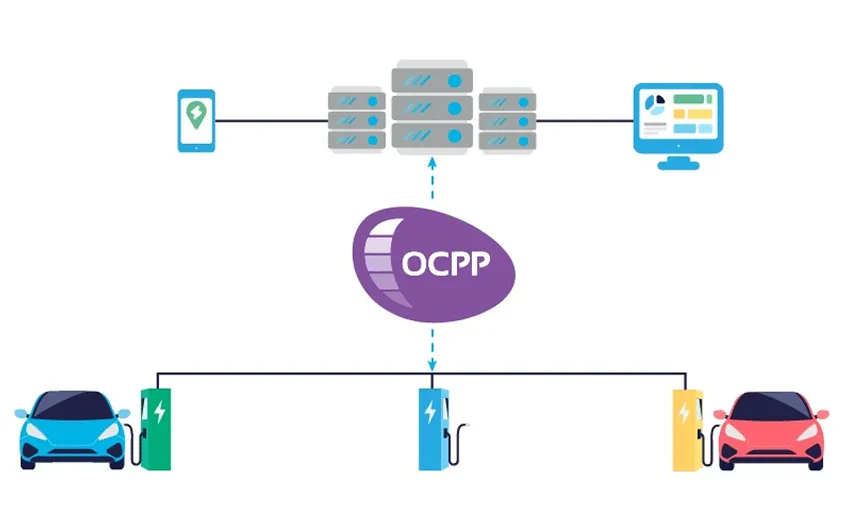
OCPP (Open Charge Point Protocol) is an open communication standard that allows EV charging stations to connect with a centralized EV Charging Management System (CMS). It creates seamless communication between EV chargers and software platforms, helping charging businesses remotely manage charging operations through cloud-based systems.
This technology enables charging station owners to connect chargers from different manufacturers into one unified management platform without compatibility issues. OCPP has become the global standard for smart EV charging infrastructure because it improves interoperability, flexibility, scalability, and long-term charger management.
With OCPP technology, businesses can remotely monitor charging stations, manage charging sessions, control pricing, process digital payments, and optimize charging performance from a single dashboard. This helps businesses reduce operational costs while improving charger uptime and user experience.
- EV chargers
- Mobile apps
- Payment systems
- Charging management software
- Cloud platforms
Benefits of OCPP-Based EV Charging Management Software
1. Centralized Charger Management
OCPP allows businesses to manage all EV charging stations from one centralized platform. Charging station operators can remotely control charger status, user activity, charging sessions, transactions, pricing systems, and station availability through a smart EV charging dashboard. This simplifies charger operations and makes it easier for businesses to manage expanding EV charging networks across multiple locations.
Centralized charger management also improves operational efficiency because businesses can instantly access live charger data and monitor the performance of every charging station without visiting the physical location.
2. Real-Time Monitoring
One of the biggest advantages of OCPP technology is real-time charger monitoring. EV charging businesses can continuously monitor charging sessions, charger connectivity, energy usage, station availability, and transaction reports through cloud-based EV charging software.
Real-time monitoring helps operators quickly detect technical issues, reduce charger downtime, improve maintenance response time, and provide a smoother charging experience for EV users.
- Live charging sessions
- Charger availability
- Energy consumption
- Charger faults
- Revenue and transactions
3. Remote Control & Maintenance
OCPP-enabled EV charging software allows operators to remotely control charging stations without physical inspection. Businesses can start or stop charging sessions remotely, restart chargers, update charger firmware, configure charging settings, and instantly detect technical problems through the EV charging CMS platform.
Remote maintenance improves charger reliability, minimizes downtime, reduces service costs, and helps charging stations operate more efficiently. This becomes especially important for businesses managing large EV charging networks in different locations.
- Start or stop charging remotely
- Restart chargers
- Update charger firmware
- Detect technical issues instantly
4. Smart Payment Integration
Modern OCPP EV charging systems support advanced digital payment integration for seamless charging experiences. EV users can easily pay for charging services using mobile apps, QR payments, RFID cards, digital wallets, and online billing systems.
Integrated payment systems improve customer convenience while helping businesses automate transaction management and revenue tracking. Smart billing systems also allow operators to create flexible pricing models based on charging time, energy consumption, or charger type.
- Digital wallets
- QR payments
- RFID charging
- Mobile app payments
- Online billing systems
5. Scalability for Growing EV Networks
As electric vehicle adoption continues to increase in Nepal and international markets, charging businesses need scalable systems that can support network expansion. OCPP makes EV charging infrastructure future-ready by allowing businesses to add new charging stations without changing the entire management platform.
This flexibility helps charging businesses expand their EV charging network efficiently while maintaining centralized management and consistent charger communication. OCPP also supports integration with future technologies such as smart grids, renewable energy systems, and advanced energy management solutions.
6. Better User Experience
OCPP-powered EV charging mobile apps improve convenience for EV drivers by providing real-time charger information, charging session management, payment access, and charging history through smartphones.
A better user experience increases customer satisfaction and encourages more EV adoption by making EV charging simple, fast, and accessible.
- Find nearest EV chargers
- Check charger availability
- Start charging using mobile apps
- View charging history
- Make digital payments easily
Why OCPP is Important for Nepal EV Charging Infrastructure
The EV market in Nepal is growing rapidly due to rising fuel prices, increasing environmental awareness, and government support for electric vehicles. As more EVs enter the market, there is increasing demand for reliable, smart, and scalable EV charging infrastructure.
OCPP technology helps businesses build efficient EV charging networks by improving charger communication, centralized monitoring, operational control, and smart charging management. It allows charging station operators to reduce operational costs, improve charger uptime, and deliver better charging experiences for EV users.
- Build reliable EV charging networks
- Manage charging stations efficiently
- Reduce operational costs
- Improve charger uptime
- Support sustainable transportation
For businesses planning to expand EV charging stations in Nepal, investing in OCPP-based EV charging management software is becoming essential for long-term growth and future-ready charging infrastructure.
Features of Smart OCPP EV Charging Software
Modern EV charging management systems include advanced smart features that help charging businesses monitor, manage, optimize, and scale their charging infrastructure efficiently.
- Live charger monitoring
- Mobile app integration
- RFID access control
- Dynamic pricing management
- Energy analytics
- User management
- Wallet and payment integration
- Charging reports and analytics
- Multi-station management
- Remote charger control
These smart features improve charging station performance, simplify management operations, optimize energy usage, and deliver a seamless charging experience for EV users and charging businesses.
Conclusion
OCPP technology is helping businesses build smarter, more efficient, and scalable EV charging networks. From centralized charger management and real-time monitoring to digital payments, remote maintenance, and smart charging features, OCPP-based EV charging software improves operations, scalability, reliability, and customer experience.
As the EV industry continues to grow in Nepal and globally, investing in smart EV charging management systems will play a major role in the future of sustainable transportation, green mobility, and intelligent EV charging infrastructure.